Building Tomorrow’s VET Educators: DRUPWB Completes Training Programme Across Six Countries
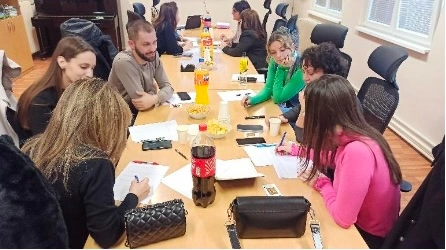
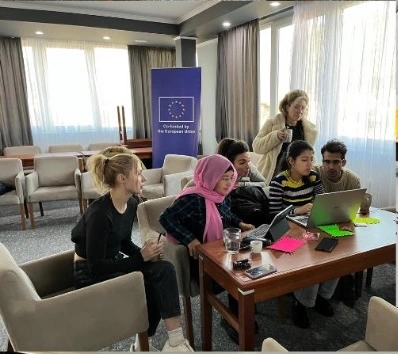
In February 2025, the DRUPWB project reached a significant milestone: a coordinated series of seven-day training programmes for educators and VET trainers was successfully delivered across six countries — Lithuania, Bosnia and Herzegovina, Germany, Croatia, Albania, and Montenegro. In total, more than 60 educators and trainers participated in these capacity-building events, all structured around the project’s four-modular curriculum covering virtual assistance, no-code programming, self-employment, and starting and running a small business.
A Curriculum Built for the Future of Work
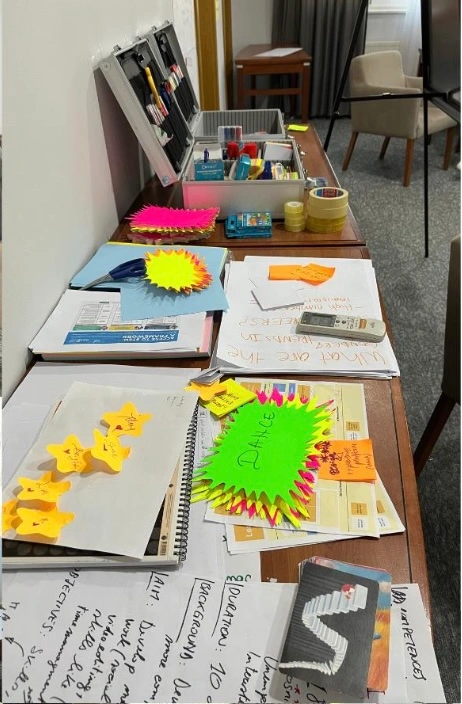
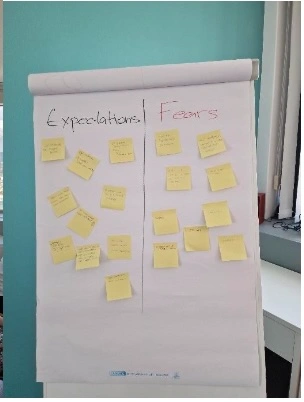
The training programme, developed as part of the DRUPWB project’s work on digital responses to unemployment in the Western Balkans, was structured around four core modules aligned with the European Qualifications Framework (EQF). Each seven-day programme combined theoretical input with hands-on exercises, role plays, brainstorming, group work, and daily self-reflection sessions. While the curriculum provided a shared framework, each partner country adapted its delivery to reflect local professional contexts, participant backgrounds, and available resources.
Lithuania — VILNIUS TECH Campus, Vilnius (13–21 February 2025)
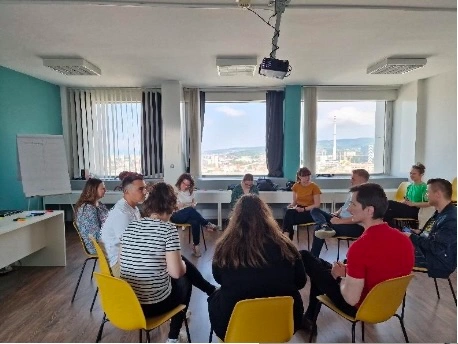
The training in Lithuania was hosted at VILNIUS TECH campuses and a partner location in Vilnius, bringing together 15 educators who are internal university staff working as teachers and VET providers. Five trainers — two from the project team and three external — led the activities and workshops.
The seven-day programme followed a blended approach, combining formal and non-formal education methods including lectures, group work, interactive exercises, brainstorming sessions, and role-play simulations. The four modules were introduced progressively, and participants reported high levels of engagement throughout. By the end of the programme, 92% expressed confidence in applying the curriculum in their own teaching, 92% showed interest in further training opportunities, and 83% appreciated the balance between theory and practice. Daily self-reflection sessions allowed trainers to adapt their approach in real time based on participant feedback. Participants noted particular interest in the self-employment and business modules, and expressed enthusiasm for a forthcoming study visit to Vilnius as an opportunity for continued learning.
Bosnia and Herzegovina — Mostar, Spin Association (16–22 February 2025)
Spin Association hosted the training in Mostar, bringing together 10 trainers and educators specializing in vocational education and training. Participants came from both Spin’s internal staff and partner organizations across the country, representing a diverse range of VET institutions. The training was also enriched by an international dimension — parts of the sessions brought together participants from across Europe, enabling knowledge sharing about VET approaches in different countries.
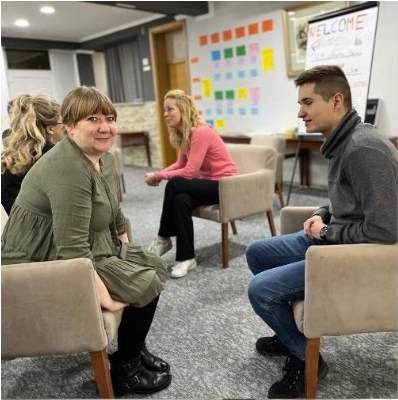
The seven-day programme was designed as an immersive STEM education and digital work experience. Each day built progressively: from team-building and career exploration, through virtual assistance and no-code programming, to self-employment and entrepreneurship, concluding with a session on artificial intelligence and career planning. The final day included a pitching session where participants presented their self-employment ideas and business plans. Engagement throughout was high and consistent. By the end of the training, participants felt confident in integrating STEM education, digital tools, and entrepreneurship into their teaching, with many expressing strong interest in further specialization in digital tools, business development, and innovative methodologies.
Germany — Freiburg and Emmendingen, Outside Media & Knowledge (1–16 February 2025)
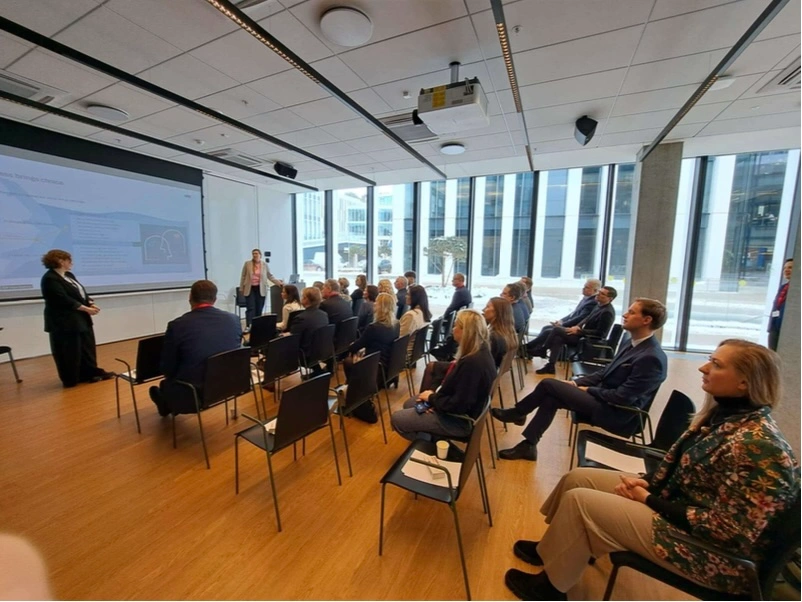
Outside Media & Knowledge (OMK) conducted the training across two locations in southern Germany — Freiburg and Emmendingen — with 13 participants in total: one OMK staff member as facilitator, one OMK staff member as participant, and 12 external VET educators. One participant joined in hybrid mode due to distance.
The German training followed a Train-the-Trainer model, equipping participants not only with the curriculum content but with the skills and methodologies to effectively deliver it to their own learners. OMK was in direct contact with participants before the event, allowing sessions to be refined to match specific learning gaps. The programme covered self-employment and business setup in Germany — including legal structures and financial considerations — digital branding and marketing using tools such as Canva, no-code programming, AI tools including ChatGPT, networking and career strategies, and business pitching. Gamified learning methods, including podcast creation and interactive challenges, were embedded throughout. Results were strong: 100% of participants reported satisfaction with what they had learned, and 95% expressed interest in furthering this training with their own learners, particularly in digital marketing for new founders.
Croatia — Zagreb, Pannonia Consulting (3–11 February 2025)
Pannonia Consulting led the training in Zagreb with 10 participants, all external VET providers from various vocational training organisations across Croatia. The programme followed the shared seven-day structure, covering STEM career exploration, the training manual, virtual assistance, no-code development, self-employment, small business development, and emerging technologies including artificial intelligence.
Participants demonstrated high engagement throughout, particularly in the hands-on sessions on virtual assistance, no-code tools, and business pitching. Feedback highlighted the value of the career-oriented content, practical workshops, and networking opportunities. Participants expressed strong confidence in implementing their newly acquired knowledge, especially in career mapping, entrepreneurship guidance, and introducing digital tools to their learners. An additional preparatory meeting was held on 12 February with five participants who will join the upcoming study visit to Vilnius — a ten-day intensive programme designed to further reinforce the knowledge and skills developed during the local training and to build connections with Lithuanian VET providers and companies.
Albania — Korçë, CRCA/ECPAT Albania (21–28 February 2025)
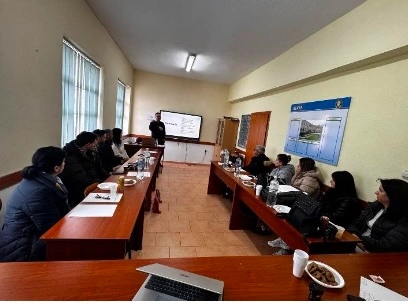
CRCA/ECPAT Albania organized the training in Korçë, a city approximately 200 km from Tirana, hosted at the Shkolla Teknike Profesionale Shërbime (Technical Vocational School Services). The location was chosen based on CRCA’s long-standing cooperation with the National Employment Office (AKPA) and the presence of two VET high schools — one specializing in tourism-related services and the other in economics — both of which face significant challenges related to youth migration to Western Europe.
Eleven participants took part — ten VET teachers from the two schools and one youth worker from CRCA’s Regional Youth Services Centre in Korçë — alongside three CRCA trainers. The training was conceptualized as a Training of Trainers, with the aim of building a foundation for continuing to train other VET educators in the future. Because all teachers had daily school responsibilities, the schedule was adapted to weekends and extended sessions on available days. The Albanian-language version of the training manual, already translated into Albanian, proved highly useful throughout. A particularly significant development emerged from this training: CRCA has already entered into discussions with the National Employment Agency (AKPA), the authority responsible for formal VET curricula in Albania, with the aim of formally accrediting the DRUPWB curriculum as part of training for NEET youth and adult learners in VET high schools and training centres across the country.
Montenegro — Podgorica, Secondary Construction and Geodesy School “Eng. Marko Radević” (20–26 February 2025)
The training in Montenegro was hosted by the Secondary Construction and Geodesy School “Eng. Marko Radević” in Podgorica, welcoming 13 participants from diverse professional backgrounds — internal school staff including teachers of geodesy, informatics, literature, and pedagogy, as well as engineers and professionals from various industries as external VET providers. The training was led by one main trainer and enriched by contributions from two guest speakers: Mirela Rajković, a freelance consultant specialising in climate change and human rights, who provided insights into freelancing as a viable career pathway for educators; and Uroš Bulatović, president of the Union of Young Entrepreneurs of Montenegro, who discussed entrepreneurial opportunities and available support programmes for new founders.
The Montenegro training was notable for its particularly rich use of digital learning tools, including Actionbound, Kahoot, Miro, Padlet, and Mentimeter — platforms that not only enhanced participant engagement but also demonstrated directly how such tools can be integrated into everyday teaching. Evaluation results were exceptional: every participant rated their overall experience at the highest possible score (5 out of 5), 88.9% stated the training fully met their expectations, and 44.4% described themselves as “very active” participants throughout all sessions. Participants particularly valued the group work, interactive activities, and the practical insights provided by the guest speakers. Many expressed a desire to implement newly learned digital platforms in their classrooms immediately, and several called for this type of training to be made available to more educators across Montenegro.
Shared Lessons, Common Impact
Across all six countries, several common themes emerged. Participants consistently reported that the most engaging and effective learning took place during hands-on workshops — whether building no-code web applications, pitching business ideas, or exploring virtual assistance tools. No-code programming and AI applications were consistently among the most popular and often entirely new topics, and all groups expressed a desire for more time on these subjects in future editions. The varying levels of prior knowledge among participants was a recurring challenge, addressed in different ways by each host — from pre-training consultations with participants before the event in Germany, to mixing ICT and non-ICT teachers in working groups in Albania.
All six trainings were aligned with the EQF and concluded with certification. Together, they have equipped more than 60 educators and VET professionals across Europe and the Western Balkans with the knowledge, skills, and confidence to bring the DRUPWB curriculum to their own learners — and in Albania’s case, potentially to the country’s formal VET system itself.